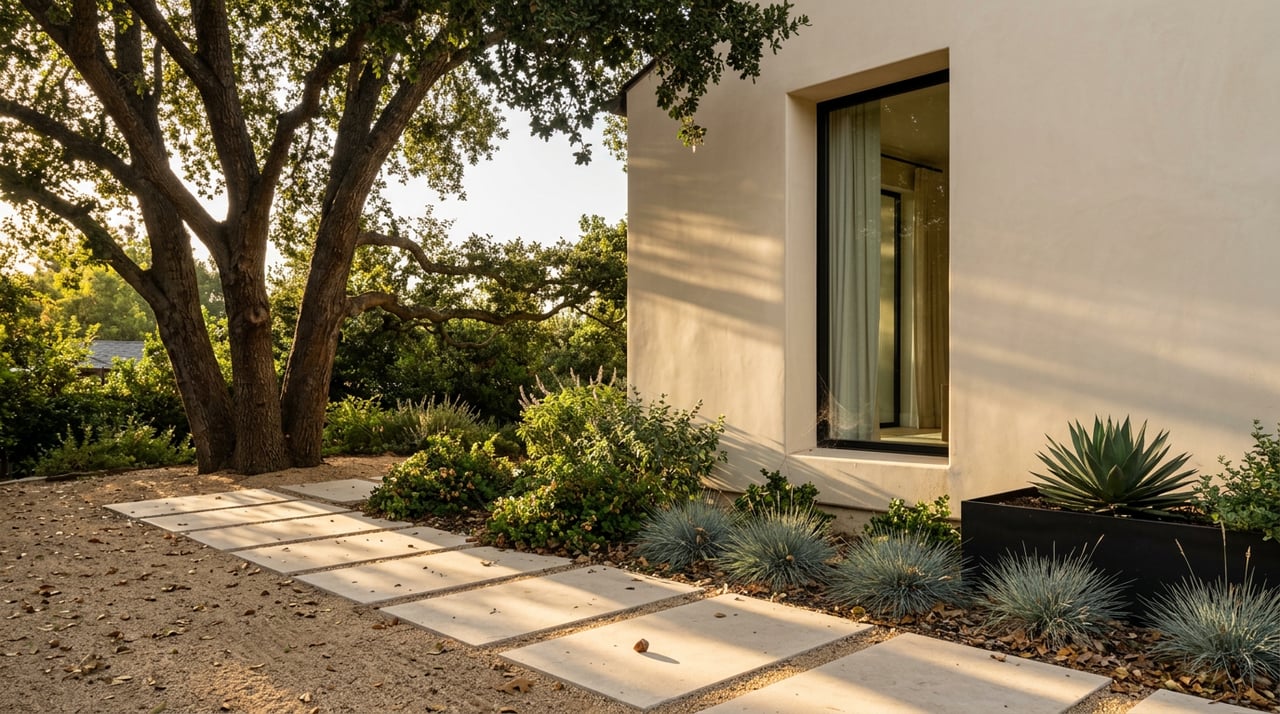
A coast live oak in the side yard used to be a landscaping detail. Since June 2022, it can be a scheduling constraint, an arborist invoice, a redesign of your ADU, and, in a bad case, a lawsuit that outlives the closing. Palo Alto's expanded Tree Protection Ordinance reclassified roughly three times as many trees as protected, and the disclosure paperwork attached to that reclassification now shows up on almost every remodel, addition, and teardown in the city.
If you are getting ready to list, or writing an offer with plans to expand, the tree is a transaction variable. Price it accordingly.
What "protected" actually means now
Before 2022, only three species carried protection in Palo Alto: coast live oak, valley oak, and coast redwood. The June 2022 amendment kept those three and added four native species plus a general size trigger that pulls in most mature trees on a typical residential lot.
| Species | Protected at trunk diameter of |
|---|---|
| Coast live oak, valley oak, bigleaf maple, incense cedar, blue oak, California black oak | 11.5 inches |
| Coast redwood | 18 inches |
| All other non-invasive, non-high-water-use species | 15 inches |
| Any Heritage Tree designated by City Council | Any size |
Diameter is measured 54 inches above natural grade, and Heritage Trees are separate from the Protected category. As of 2023 the city lists only eight Heritage Trees citywide, so most homeowners are dealing with the Protected Mature Tree category, not the Heritage list. City staff told council the 2022 change raised the count of protected trees on private property from about 81,720 to roughly 224,100, out of an estimated 600,000 trees citywide.
The practical read for a seller: assume any mature tree on your lot is protected until an arborist tells you otherwise.
The disclosure that changes your listing timeline
Palo Alto Municipal Code §8.10.040 requires that most development or demolition applications include a statement from a designated arborist identifying every protected tree on the property, along with species, size, tree protection zone, and location. Knowingly or negligently providing false or misleading information is a code violation, which is a real disclosure exposure for a seller who signs the form without reading it.
Where sellers get surprised:
- Kitchen and bath remodels that stay inside the existing footprint often skip this requirement, but the moment plans touch grading, trenching, paving, or landscaping that changes water availability to a protected tree, the disclosure kicks in.
- ADUs that conform to state-standard sizing under §18.09.030 Table 1 can use an applicant-completed disclosure, but larger ADUs still need an arborist to sign.
- Any activity inside the Tree Protection Zone requires a full Tree Preservation Report from an ISA-certified arborist, not just a checkbox.
The Tree Protection Zone is defined on the city's Tree Protection sheet as 10 times the trunk diameter measured at 54 inches above grade. A 20-inch valley oak carries a 200-inch, roughly 17-foot, protection radius. Trenching for a sewer lateral or a new gas line inside that radius must be done by air-spade rather than a standard trencher, and any exposed root two inches or greater has to stay intact.
Sellers who plan pre-listing improvements should build two to four extra weeks into the calendar for arborist scoping. Buyers writing offers on a property where the previous owner already pulled permits should ask for the T-1 sheet in the disclosure packet. It answers questions the standard TDS does not.
When a tree pins down your renovation math
The single most expensive surprise in Palo Alto tree rules is the development moratorium. Under the 2022 ordinance, removing a protected tree can trigger a 36-month development moratorium on the property, though the applicant can propose mitigation measures to lift it early. A buyer who quietly plans to bring down an oak so the pool house can go where the oak is may be signing up for a three-year pause on the whole project.
The allowed grounds for removing a protected tree are narrow. The tree must be dead or hazardous, a nuisance under specific city-defined conditions, damaging the foundation or eaves of a primary residence, crowding an adjacent protected tree, or standing where no financially feasible design alternative exists. Every one of those grounds requires a certified arborist to document it, and the permit application goes through Palo Alto Urban Forestry.
A protected tree is not a landscape feature you inherit at close of escrow. It is a piece of the property's development capacity, and it needs to be priced into the offer or the list price the same way square footage is.
The January 2024 amendment softened the edges after a winter of storm damage complaints, adding exceptions for a tree that is "incompatible with its immediate environment" or is a "detriment" to an adjacent protected tree. Council did not, though, roll back the disclosure regime, the diameter thresholds, or the species list. If you were relying on the 2024 changes to make a removal easy, read the exception language with an arborist before you draft an offer with a contingency around it.
The state-law twist buyers don't see coming
The ordinance governs when a city permit is needed. It does not govern what a neighbor can sue you for after closing. California Civil Code §3479, the nuisance statute, sits above the local ordinance, and Palo Alto sellers and buyers have run into a fact pattern that turns on that hierarchy.
In a case that circulated widely among local agents, an owner of a home damaged by a neighbor's protected coast redwoods pursued the buyer of the tree-owning property after the sale closed. The listing agent's assurance that the ordinance would prevent removal did not resolve the underlying nuisance claim, and a Santa Clara County Superior Court judge, applying state law, held the new homeowner responsible. The insurance payout reached roughly $300,000, and the litigation ran more than two years.
The takeaway is not that every tree is a lawsuit waiting to happen. It is that a protected tree with a history of neighbor complaints, root incursion, or documented property damage is a material fact. Sellers should disclose known history in writing. Buyers should ask the listing agent for any prior arborist reports, city correspondence, or neighbor communications about the tree, and confirm nothing in writing that the seller and their arborist have not already put on record.
Before you list: a working checklist
- Walk the lot with an ISA-certified arborist and identify every trunk that meets the protected thresholds. Note diameter at 54 inches, species, and condition.
- Ask the arborist to map each Tree Protection Zone. If a driveway repour, patio expansion, or drainage repair was on your pre-listing punch list, confirm whether it sits inside a TPZ before you schedule the work.
- Pull any past tree permits from the city and include them in the disclosure packet. Palo Alto's Urban Forestry contact is 650-496-5953.
- If a neighbor has ever complained in writing about roots, canopy, or debris, disclose it. State law will follow the buyer past closing regardless of what the city ordinance says.
- If a Heritage Tree is on the lot, flag it in the listing description. Buyers who want a blank canvas will self-select out early and save everyone the retrade.
Questions sellers and buyers ask me
If the tree is dying, can I just take it down before we list? Only with a Protected Tree Removal Permit issued by Urban Forestry, supported by a certified arborist report documenting death, hazard, or one of the other listed grounds. Removing without a permit exposes you to civil and criminal penalties under §8.10.040, and creates a disclosure problem in escrow.
Does the ordinance affect a standard resale with no remodel plans? Directly, no. Indirectly, yes. Any buyer planning an addition, an ADU, or landscaping that touches a TPZ inherits the disclosure and preservation requirements. That affects how the buyer values the lot, which affects your list price.
How do I know whether a tree is on the "high water use" or "invasive" exclusion list? The exclusions reference the California Invasive Plant Council and the state water use classification, and the city's Tree Ordinance Information page publishes the current lists. An arborist can confirm in a site visit.
Are the rules the same for Palo Alto and neighboring cities? No. Los Altos, Mountain View, and Menlo Park have their own ordinances with different thresholds and species lists. If you own or are buying across city lines, do not assume the Palo Alto rule set applies.
Palo Alto rewards owners who understand the code before they hire the crew. If you are thinking about listing a home with mature trees, or writing an offer on one with plans to expand, Christy Lin Real Estate Services can walk the property with you, coordinate an arborist scope, and price the tree into the strategy rather than around it. Let's Connect.