Wondering why Eichler-style homes in Palo Alto inspire such loyalty and curiosity? If you are drawn to mid-century design, indoor-outdoor living, and homes that feel different from the typical Silicon Valley house, an Eichler can be both exciting and a little intimidating. This guide will help you understand what makes these homes special, where you’ll find them in Palo Alto, and what to look for if you plan to buy, sell, or update one. Let’s dive in.
Why Eichler Homes Matter in Palo Alto
Palo Alto is one of the most important places to see Eichler-style homes in the Bay Area. According to the City of Palo Alto, the city has well over 2,000 Eichler residences and 32 mapped Eichler tracts.
These neighborhoods reflect Palo Alto’s post-World War II growth, especially as the city expanded south and east. They also capture a big shift in residential design, where modern architecture became part of everyday life for middle-class homeowners.
Joseph Eichler worked with architects including Anshen & Allen, Jones & Emmons, and Claude Oakland. His homes brought modern design ideas to a wider market, with open plans, simple materials, and stronger connections between interior space and the yard.
Two Palo Alto neighborhoods stand out for their historic significance. Green Gables and Greenmeadow are both listed as National Register historic districts, which makes them especially important in any conversation about Eichler homes in the city.
What Makes an Eichler-Style Home Distinct
Eichler homes are easy to recognize once you know what to look for. Many Palo Alto examples feature one-story massing, post-and-beam construction, slab foundations, and low-pitched or flat roof forms.
You will also often see broad eaves, exposed rafter tails, wood siding, clerestory windows, and recessed or side entries. In many homes, the front looks more restrained, while the rear opens up with larger glass walls facing the yard.
That contrast is part of the appeal. From the street, the home can feel calm and understated. Inside and at the back, it often feels much brighter, more open, and more connected to outdoor space.
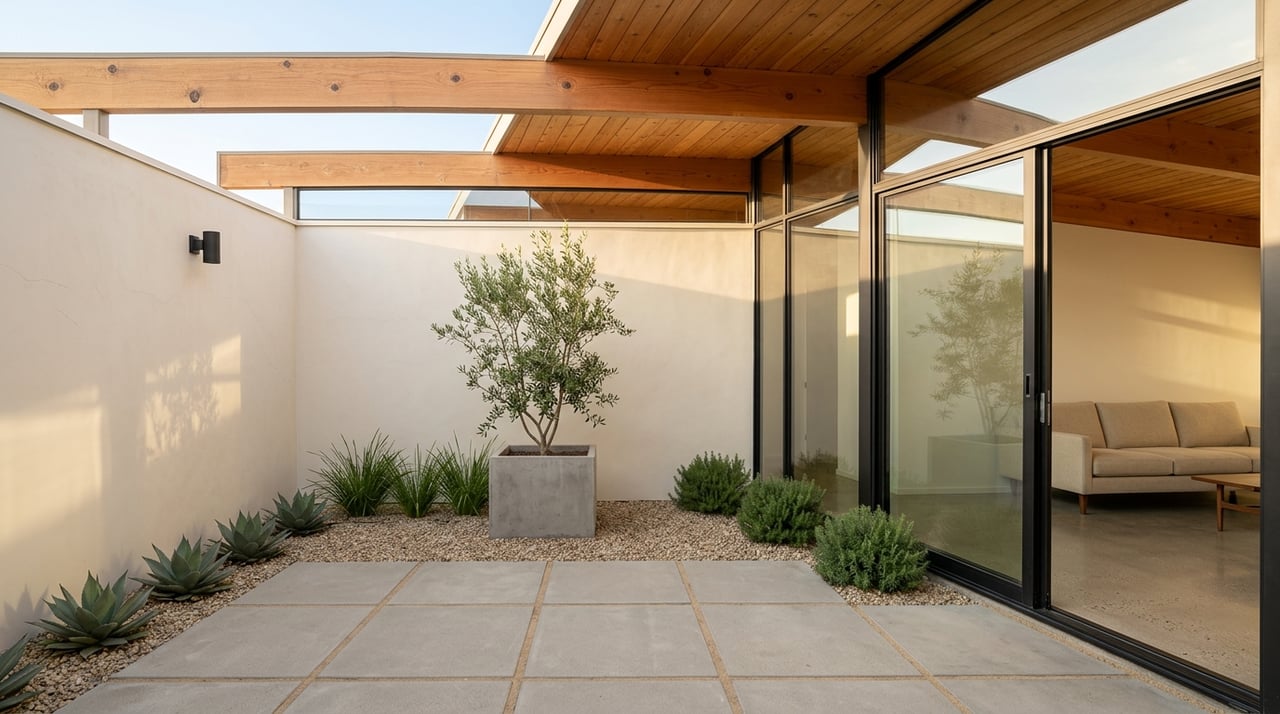
Another hallmark is the use of atriums or courtyards. These features bring light into the center of the home and support the indoor-outdoor lifestyle that Eichler neighborhoods are known for.
How Indoor-Outdoor Living Shapes the Design
If you love natural light, Eichler-style homes often deliver it in a very intentional way. Large rear glass walls, patios, and terraces help blur the line between inside and outside.
The City of Palo Alto also describes a broader landscape pattern around these homes. Many Eichler tracts have consistent setbacks, curving streets, simple planting schemes, and low groundcover that reinforce a clean, modern look.
This means the relationship between the house and the lot matters a lot. Privacy, daylight, and the flow from living spaces to the yard are not just nice extras. They are central parts of the design.
Not Every Palo Alto Eichler Looks the Same
A lot of buyers assume all Eichler homes follow one exact formula. In reality, Palo Alto has several variations, including front-gabled, flat, flat-with-shed, and flat-with-gable roof forms.
Later examples in Palo Alto also introduced more variety in rooflines and massing. The city’s documentation notes that not every Eichler looks identical, and some later homes differ noticeably from the earlier tract homes many people picture first.
There are even some two-story Claude Oakland designs in Los Arboles Addition No. 2. So if you are searching for an Eichler-style home, it helps to stay open-minded about what “authentic” can look like within Palo Alto’s Eichler history.
Where to Find Eichler Homes in Palo Alto
Eichler homes are spread across a wide area of Palo Alto rather than concentrated in just one pocket. The city’s tract survey identifies neighborhoods including University Gardens, Charleston Meadows, Green Gables, Fairmeadow, Greenmeadow No. 1 and No. 2, Triple El, Edgewood, Los Arboles, and Royal Manor.
These tracts are located around major Palo Alto corridors such as Middlefield Road, San Antonio Road, Embarcadero Road, El Camino Real, Oregon Expressway, Alma Street, and Highway 101. The city also notes that smaller pockets of one or two Eichler homes exist outside the 32 mapped tracts.
Some of the best-known areas include Green Gables and Greenmeadow. Green Gables was developed in 1950 and 1951, while Greenmeadow followed in 1954 and 1955.
For local context, Green Gables includes streets such as Channing Avenue, Ivy Lane, Greer Road, and Wildwood Lane. Greenmeadow is associated with streets including Greenmeadow Way, Charleston Road, Ely Place, Creekside Drive, Alma Street, Parkside Drive, and Duncan Place.
Why Green Gables and Greenmeadow Stand Out
These two neighborhoods are often the first ones people mention when talking about Eichlers in Palo Alto, and for good reason. Both are National Register historic districts, which gives them added visibility and importance.
Green Gables is described in the state listing as a single-story subdivision with three bedrooms and one bath. Greenmeadow introduced features such as a fourth bedroom or all-purpose room, double-car garages, built-in appliances, inside laundry, and light-toned ceilings meant to make rooms feel larger.
These details show how Eichler homes evolved over time. Even within the same broad design tradition, later neighborhoods could reflect changing household needs and a slightly different idea of comfort and convenience.
What Buyers Should Check Before Making an Offer
Eichler homes can be wonderful to live in, but they are not a set-it-and-forget-it type of property. The City of Palo Alto states that Eichler homes from the 1950s through the 1970s require maintenance, which is an important reminder for buyers.
Before you move forward, it is wise to research the home’s roof, glazing, heating, slab, and any prior alterations with a qualified inspector. These systems are closely tied to the original design, so understanding their current condition can help you make a more confident decision.
A practical buyer checklist may include:
- Roof type and current condition
- Slab foundation and any visible concerns
- Radiant heat embedded in the floor, where present
- Window and glass wall condition
- Past remodeling work or additions
- Whether the property is in a historic district or tract with added review considerations
If you love the design, the goal is not to be scared off. It is to go in with clear eyes, good information, and the right expectations.
What Remodel Plans Should Account For
If you are thinking about updating an Eichler, Palo Alto has some local details you should not overlook. The city created Eichler design guidelines as a voluntary planning tool for homeowners, architects, and city staff.
That said, the level of review can vary depending on where the home is located. The city notes that homeowners in the Greenmeadow and Green Gables historic districts may want a stricter interpretation to help preserve National Register eligibility.
The city also states that some neighborhoods, including Greenmeadow, Edgewood, and Charleston Meadows, have Architectural Control Committees that use CC&Rs to guide project review. So before planning a major remodel or addition, it is smart to confirm not just city guidance, but also any neighborhood-specific review process.
What Sellers Should Understand About Eichler Appeal
If you own an Eichler-style home in Palo Alto, your buyer pool may be especially design-aware. Many buyers are not just looking for square footage. They are looking for the atrium, the glass walls, the post-and-beam look, and the lifestyle that comes with it.
That means presentation matters. Clean lines, natural light, the relationship between the house and yard, and the visibility of original architectural character can all shape how buyers respond.
It also helps to be ready for practical questions. Buyers may ask about the slab, heating, glazing, roof condition, and past updates, so strong preparation and clear documentation can make the conversation smoother.
Why Local Guidance Helps With Eichler Homes
Buying or selling an Eichler is often a little different from working with a more typical home. The style has loyal fans, but it also comes with details that deserve careful review, especially around condition, alterations, and neighborhood context.
That is where clear, calm guidance matters. In a market like Palo Alto, you want advice that blends design awareness with practical analysis so you can make a decision that fits both your lifestyle and your long-term goals.
Whether you are exploring your first Eichler or preparing to sell one, having an advisor who can explain the details in a simple, grounded way can make the process feel much more manageable. If you are considering a move in Palo Alto, Christy Lin can help you navigate the process with thoughtful, data-informed support.
FAQs
How many Eichler homes are in Palo Alto?
- The City of Palo Alto says the city has well over 2,000 Eichler residences and 32 mapped Eichler tracts, plus a few smaller pockets outside those mapped areas.
Which Palo Alto Eichler neighborhoods are historic districts?
- Green Gables and Greenmeadow are the two Palo Alto Eichler neighborhoods identified as National Register historic districts.
What features define an Eichler-style home in Palo Alto?
- Common features include one-story massing, post-and-beam construction, slab foundations, low-pitched or flat roofs, clerestory windows, atriums or courtyards, wood siding, and large rear glass walls that connect the home to the yard.
Are all Palo Alto Eichler homes the same style?
- No. Palo Alto includes several Eichler roof and massing variations, and later examples can look different from earlier tract homes.
What should buyers inspect in a Palo Alto Eichler home?
- Buyers should carefully review the roof, glazing, heating, slab, and any prior alterations with a qualified inspector because these systems are central to the original design.
Do Palo Alto Eichler neighborhoods have remodel rules?
- Some do. In addition to the city’s advisory Eichler guidelines, certain neighborhoods such as Greenmeadow, Edgewood, and Charleston Meadows have Architectural Control Committees that use CC&Rs to guide project review.